

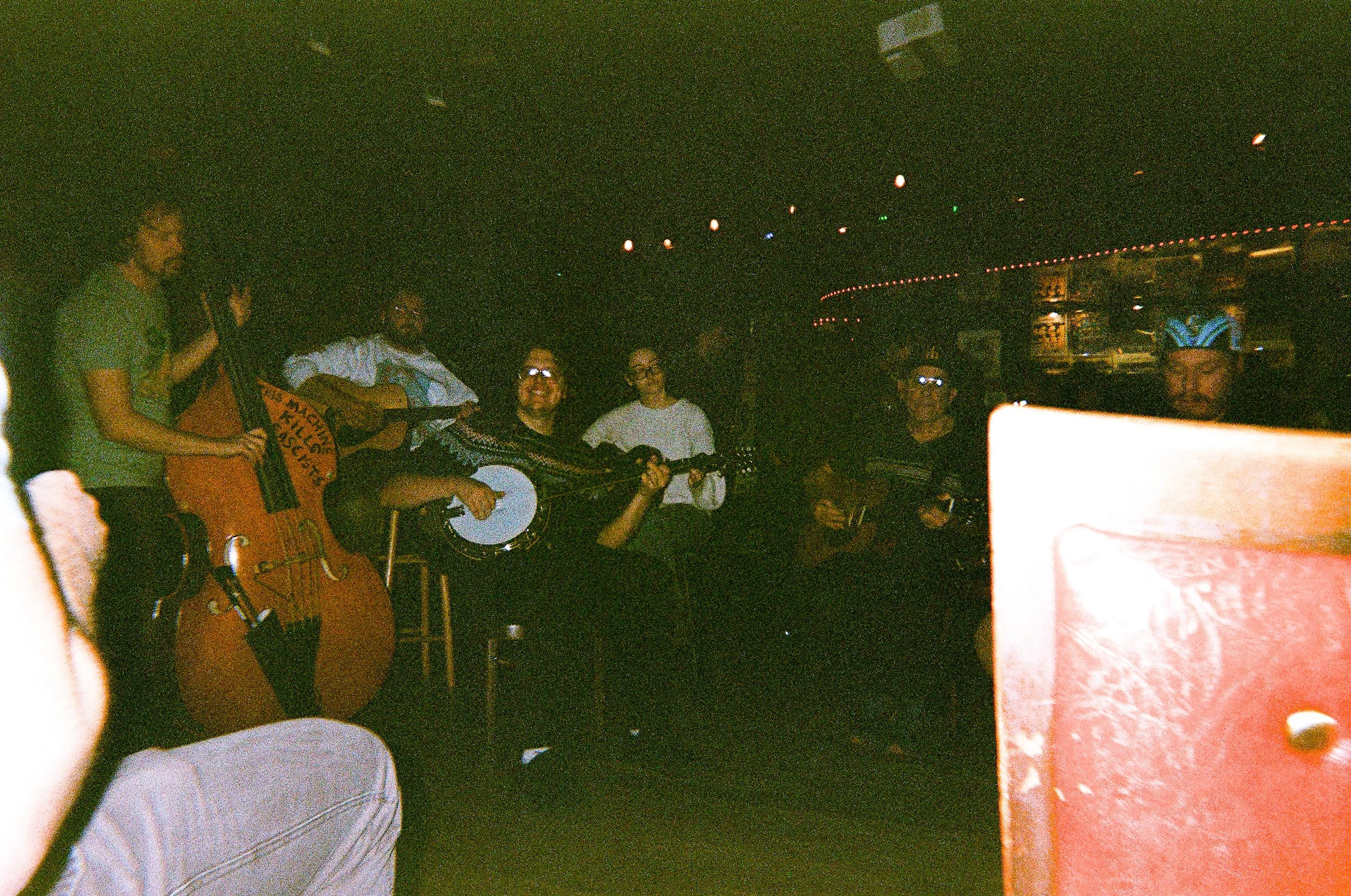
Welcome to your first jam, We’re so glad you’re here!
First things first, what is a bluegrass jam
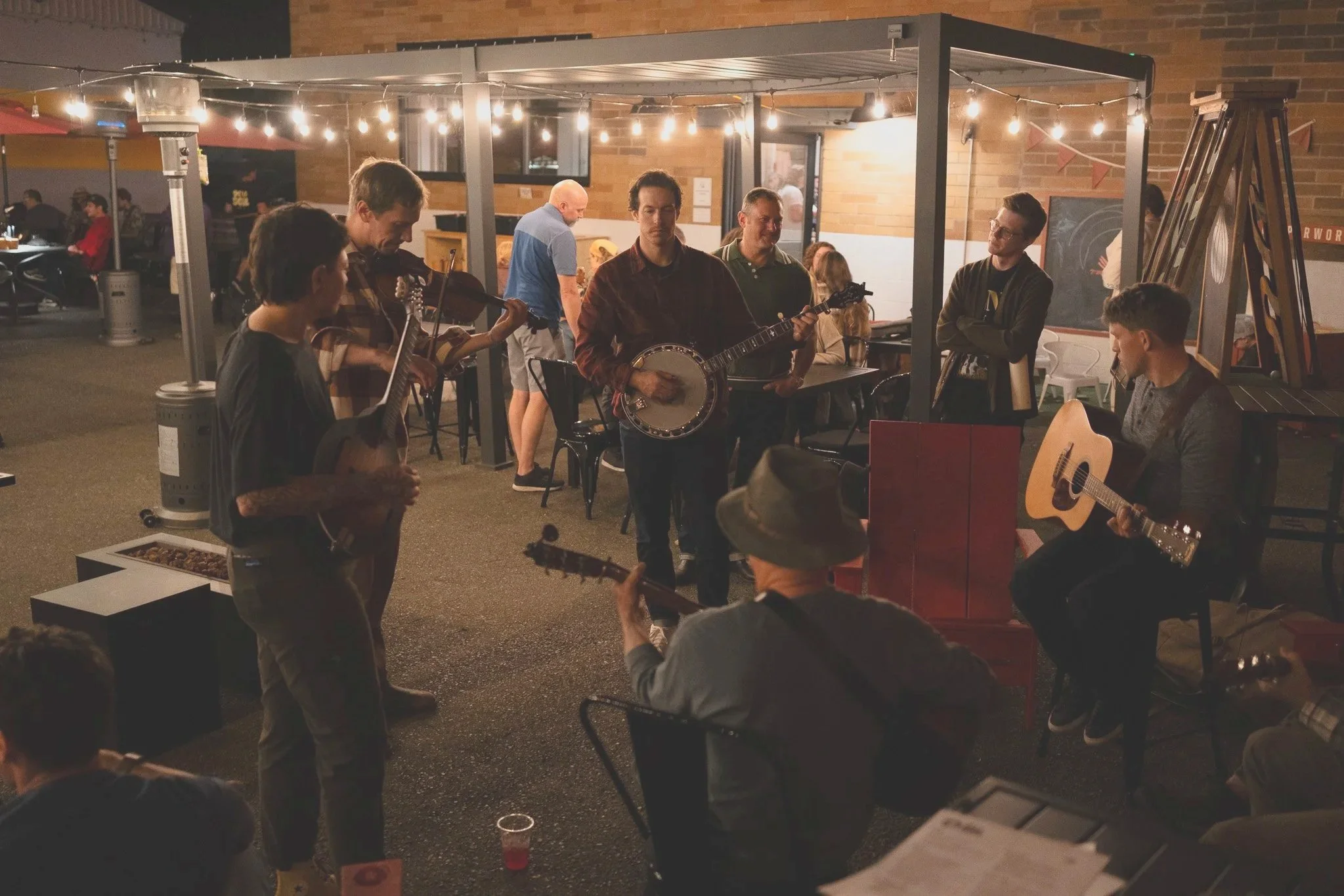
Outlanders Opry VII
outdoor jam
Bluegrass Jams go way way way back. Jams at their heart are a gathering of musicians, both seasoned players and beginners, who come together to share songs, learn from one another, and play music in a relaxed, friendly circle.
But They Aren’t An Open Mic.
Though improvisation is critical to the vibes of a bluegrass jam so is the structure.
Unlike a concert, or an open-mic, a jam isn’t about a single performer. It’s a musical conversation built on collaboration, listening, and spontaneous creativity. Outlanders Jams, and most regular jams, are guided by a jam host, who acts as a ringleader to make sure the structure is in place.
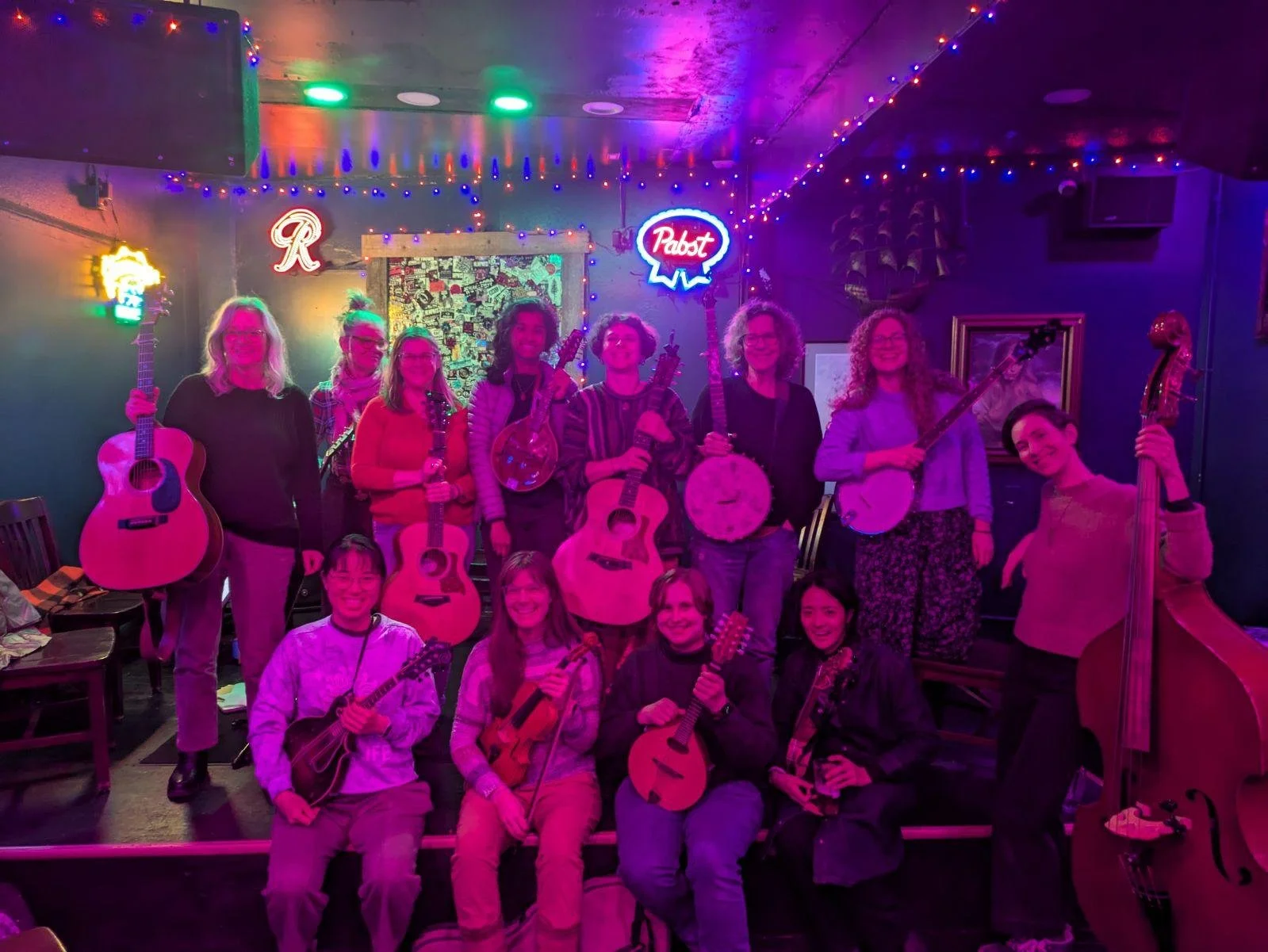
Outlanders Femme Jam
Every jam has its own rhythm, and part of the fun is learning how to move with it. These aren’t strict rules as much as ways to keep the circle flowing, the music sounding good, and everyone having a great time.
Ground Rules
1. Playing With Awareness
If you step into the circle, awareness is everything. You don’t have to know every song, but you do need to know how loud and how fast you’re playing. If you can’t hear the soloist or singer, you’re playing too loud. Bluegrass thrives on dynamics and space. It’s perfectly fine to sit out for a tune, drop to quiet strumming, or just listen. In fact, listening is one of the best ways to learn.
2. Circle Movement
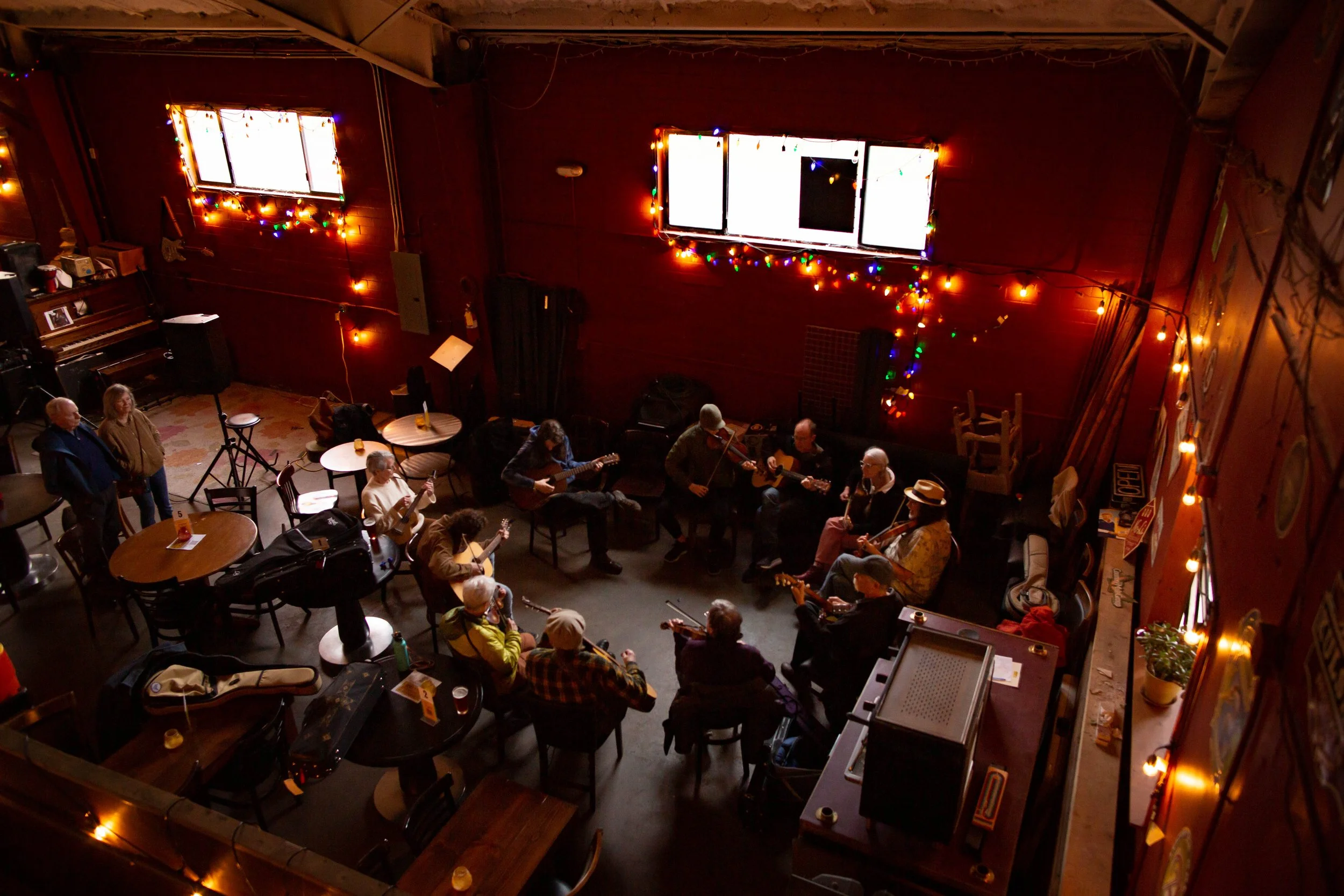
Songs and breaks get passed around to the left. When it’s your neighbor’s turn to call a song, pay attention to what they pick. Let them know ahead of time if you think it’s something you want to solo over. If during the tune you change your mind give your partner a heads up so they know to keep it moving. Communication in the circle keeps things smooth and avoids awkward pauses or jam-busts. And remember, you don’t have to take every break. Play when it feels right.
Outlanders Inaugural Opry Jam
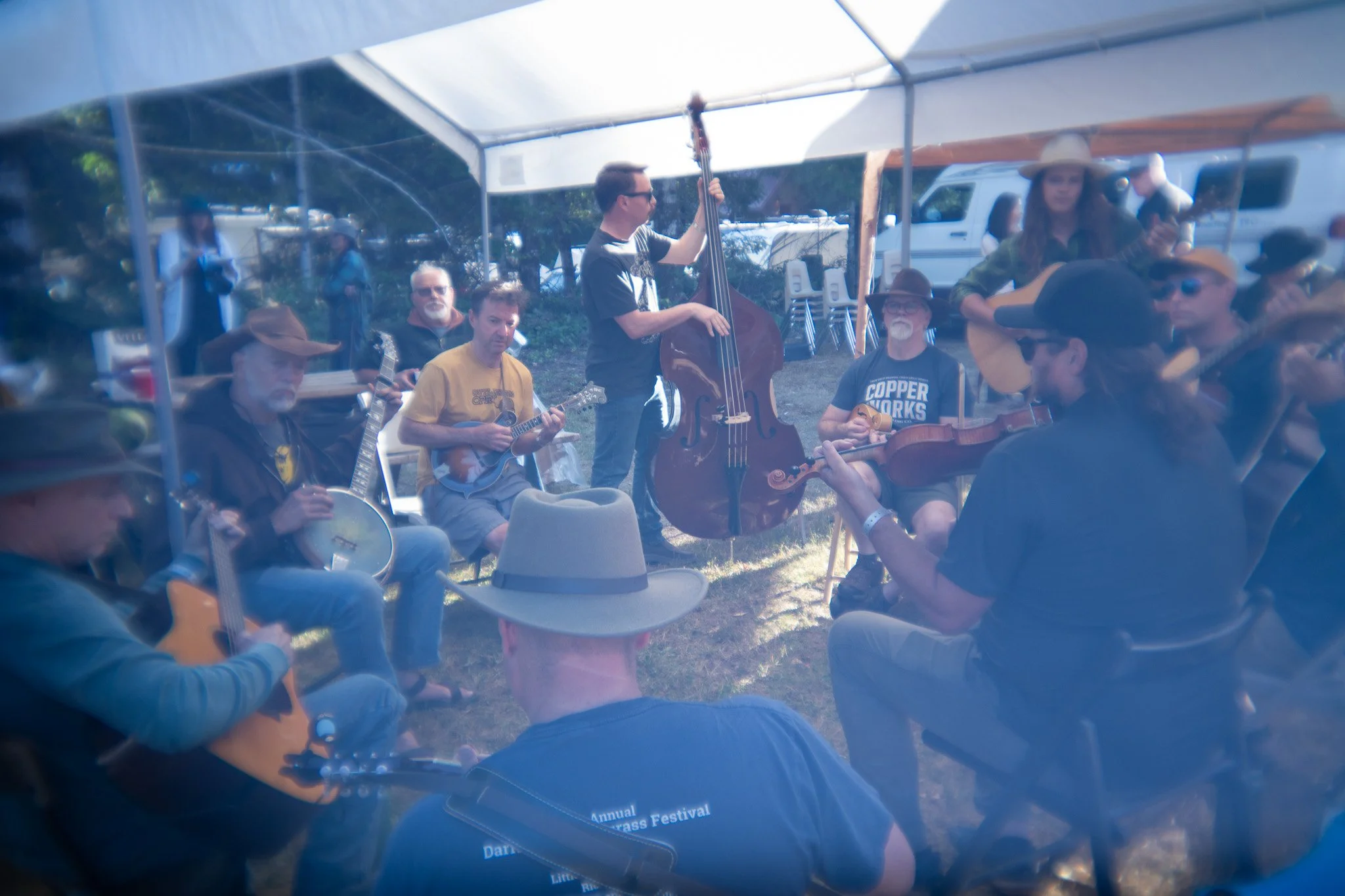
Outlander Outpost @ Darrington Bluegrass Festival 2025
3. Repertoire and Your Turn
If the song choice comes to you, it’s your turn to steer the ship. That means calling the tune, the key, and the tempo, and making sure everyone, especially the bassist, knows the structure. It’s also your job to know who wants to take a solo, and to signal the ending with a clear foot kick. Each jam host may have slightly different guidelines about what songs are fair game, so check in before calling your tune. Some hosts are cool with Grateful Dead tunes, some hosts hate Grateful Dead tunes, some jams are more trad focused. Fiddle tunes are usually pretty safe.
And if it feels like too much to take on, or you don’t know the repertoire yet, just say “pass.” There’s no pressure to lead until you’re ready.
This Is Just The Tip Of The Iceberg
These aren’t set-in-stone rules. Every jam, host, and sub-genre has its own flavor and flow. When in doubt, ask the jam host—they’re there to help guide things and make sure everyone has a good time.
To dig deeper into the finer points of jam etiquette, we recommend reading Outlanders Co-Founder Matt C. Bruno’s “Bluegrass Jam Etiquette.” It’s a great resource for understanding the unspoken rhythm of a good jam.